
Drilling technology
Contact us for assistance with your project.
Take advantage of our extensive experience and expertise.
Your Didaktik Manufaktur Hamburg Team !
We will be happy to send you a personalized quote accompanied by
one or more useful extension options and modules.
Back to previous page

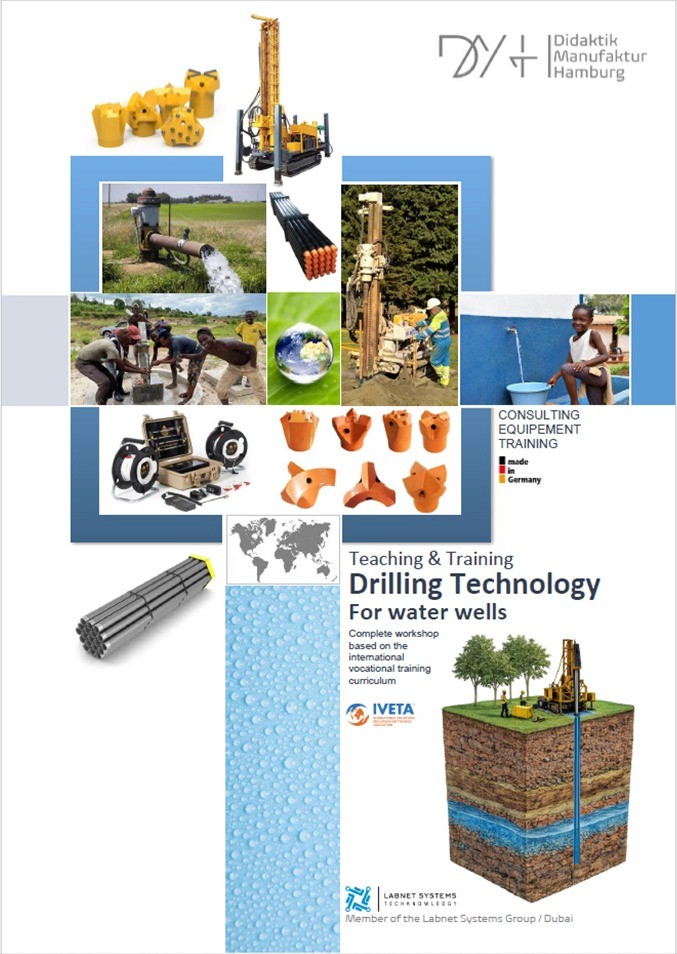
Drilling Technology - Drinking Water Wells
Stationary & Mobile Training and Demonstration Systems for Sustainable Water Supply.
Fully equipped drilling and well construction unit for training, practical application,
and regional value creation.
Back to previous page

In line with our educational and development philosophy, this workshop integrates drilling technology, hydrogeology, mechanical and process engineering, quality assurance, maintenance, as well as project and operations management into a highly practice-oriented overall concept.
The training program is structured along the entire value chain of a drinking water well – from initial site assessment and exploratory drilling to well construction, water abstraction, hygiene, operation, and long-term maintenance.
Participants acquire a coherent, hands-on competency profile that enables them either to work as qualified professionals in water supply projects or – with appropriate motivation – to establish their own well drilling, service, or maintenance operations.
Practical Learning Along the Entire Well Construction Process
With the fully equipped drilling technology unit, participants gain practical experience in all technical and operational steps of drinking water well construction, including:
Site assessment and basic hydrogeological evaluation
Execution of exploratory drilling in unknown subsurface conditions
Drilling in unconsolidated formations (mud rotary drilling) and hard rock (DTH hammer drilling)
Operation and maintenance of drilling rigs, compressors, flushing systems, and tools
Borehole development, cleaning, and stabilization
Well completion with screen pipes, gravel pack, and sealing
Installation of drinking water pumps and hygienic wellheads
Initial water abstraction, flushing, disinfection, and water sampling
In addition, topics such as operational safety, maintenance planning, spare parts management, occupational safety, and environmental and hygiene standards are covered. Participants learn not only how to drill, but why certain technical decisions are critical for long-term water quality and well sustainability.
This workshop therefore conveys not only technical skills, but also a deep understanding of the responsibility associated with drinking water well construction: A poorly constructed well can be just as harmful as having no well at all. Quality, care, and sustainability are therefore at the core of the program.
Equipment & Learning Environment
The training system is based on a fully equipped drilling and well construction unit, consisting of:
Mobile drilling rig with accessories
Drill pipes and drilling tools for different geological formations
Flushing and compressor systems
Consumables and spare parts for multiple exploratory drillings
Complete well completion materials for one drinking water well
Pumping and water conveyance technology for potable water
The equipment is designed for groups of approximately 16–22 participants, with parallel team-based work (e.g. drilling team, flushing team, technical/maintenance team, documentation team).
Competency Framework (Structure), Organized into 6 Modules
1. Hydrogeology & Site Assessment (HG)
Fundamentals of aquifers, soil and rock types, exploratory drilling
2. Drilling Technology & Methods (DT)
Mud rotary drilling, DTH hammer drilling, tool selection, drilling parameters
3. Machinery, Maintenance & Safety (MM)
Drilling rig, compressor, maintenance cycles, occupational safety
4. Well Completion & Drinking Water Hygiene (WH)
Screen pipes, gravel pack, sealing, disinfection
5. Operation, Maintenance & Sustainability (OM)
Long-term operation, repair, spare parts management
6. Project Management & Local Value Creation (PM)
Planning, cost control, community involvement, service models
Added Value Beyond Training – Practice-oriented teaching approach
Beyond pure training activities, the drilling technology unit enables the implementation of real well construction projects, thereby allowing:
Generation of income through well drilling or maintenance services
Supply of water to communities, schools, or health centers
Integration of practical project work into the training program
This allows the program to become partially self-financing in the long term, while simultaneously delivering direct social impact.
Stationary or Mobile Deployment
The systems are designed for both stationary training facilities and mobile workshop solutions (trailer-mounted). This enables training activities to be conducted directly in rural regions – where access to safe drinking water is most urgently needed.
Available Extension Modules:
Conclusion
This workshop combines drilling technology, drinking water quality, education, and development impact into an integrated overall concept. It empowers local stakeholders to independently plan, construct, and operate sustainable drinking water wells.
Contact us if you require support for your project.
Benefit from our many years of experience and expertise.
Contact us for assistance with your project.
Take advantage of our extensive experience and expertise.
We will be happy to send you a personalized quote accompanied by
one or more useful extension options and modules.
Your Didaktik Manufaktur Hamburg Team !
In line with our educational and development philosophy, this workshop integrates drilling technology, hydrogeology, mechanical and process engineering, quality assurance, maintenance, as well as project and operations management into a highly practice-oriented overall concept.
The training program is structured along the entire value chain of a drinking water well – from initial site assessment and exploratory drilling to well construction, water abstraction, hygiene, operation, and long-term maintenance.
Participants acquire a coherent, hands-on competency profile that enables them either to work as qualified professionals in water supply projects or – with appropriate motivation – to establish their own well drilling, service, or maintenance operations.
Practical Learning Along the Entire Well Construction Process
With the fully equipped drilling technology unit, participants gain practical experience in all technical and operational steps of drinking water well construction, including:
Site assessment and basic hydrogeological evaluation
Execution of exploratory drilling in unknown subsurface conditions
Drilling in unconsolidated formations (mud rotary drilling) and hard rock (DTH hammer drilling)
Operation and maintenance of drilling rigs, compressors, flushing systems, and tools
Borehole development, cleaning, and stabilization
Well completion with screen pipes, gravel pack, and sealing
Installation of drinking water pumps and hygienic wellheads
Initial water abstraction, flushing, disinfection, and water sampling
In addition, topics such as operational safety, maintenance planning, spare parts management, occupational safety, and environmental and hygiene standards are covered. Participants learn not only how to drill, but why certain technical decisions are critical for long-term water quality and well sustainability.
This workshop therefore conveys not only technical skills, but also a deep understanding of the responsibility associated with drinking water well construction: A poorly constructed well can be just as harmful as having no well at all. Quality, care, and sustainability are therefore at the core of the program.
Equipment & Learning Environment
The training system is based on a fully equipped drilling and well construction unit, consisting of:
Mobile drilling rig with accessories
Drill pipes and drilling tools for different geological formations
Flushing and compressor systems
Consumables and spare parts for multiple exploratory drillings
Complete well completion materials for one drinking water well
Pumping and water conveyance technology for potable water
The equipment is designed for groups of approximately 16–22 participants, with parallel team-based work (e.g. drilling team, flushing team, technical/maintenance team, documentation team).
Competency Framework (Structure), Organized into 6 Modules
1. Hydrogeology & Site Assessment (HG)
Fundamentals of aquifers, soil and rock types, exploratory drilling
2. Drilling Technology & Methods (DT)
Mud rotary drilling, DTH hammer drilling, tool selection, drilling parameters
3. Machinery, Maintenance & Safety (MM)
Drilling rig, compressor, maintenance cycles, occupational safety
4. Well Completion & Drinking Water Hygiene (WH)
Screen pipes, gravel pack, sealing, disinfection
5. Operation, Maintenance & Sustainability (OM)
Long-term operation, repair, spare parts management
6. Project Management & Local Value Creation (PM)
Planning, cost control, community involvement, service models
Added Value Beyond Training – Practice-oriented teaching approach
Beyond pure training activities, the drilling technology unit enables the implementation of real well construction projects, thereby allowing:
Generation of income through well drilling or maintenance services
Supply of water to communities, schools, or health centers
Integration of practical project work into the training program
This allows the program to become partially self-financing in the long term, while simultaneously delivering direct social impact.
Stationary or Mobile Deployment
The systems are designed for both stationary training facilities and mobile workshop solutions (trailer-mounted). This enables training activities to be conducted directly in rural regions – where access to safe drinking water is most urgently needed.
Available Extension Modules:
Conclusion
This workshop combines drilling technology, drinking water quality, education, and development impact into an integrated overall concept. It empowers local stakeholders to independently plan, construct, and operate sustainable drinking water wells.
Contact us if you require support for your project.
Benefit from our many years of experience and expertise.
Back to previous page
Contact us for assistance with your project.
Take advantage of our extensive experience and expertise.
We will be happy to send you a personalized quote accompanied by
one or more useful extension options and modules.
Your Didaktik Manufaktur Hamburg Team !
Back to previous page
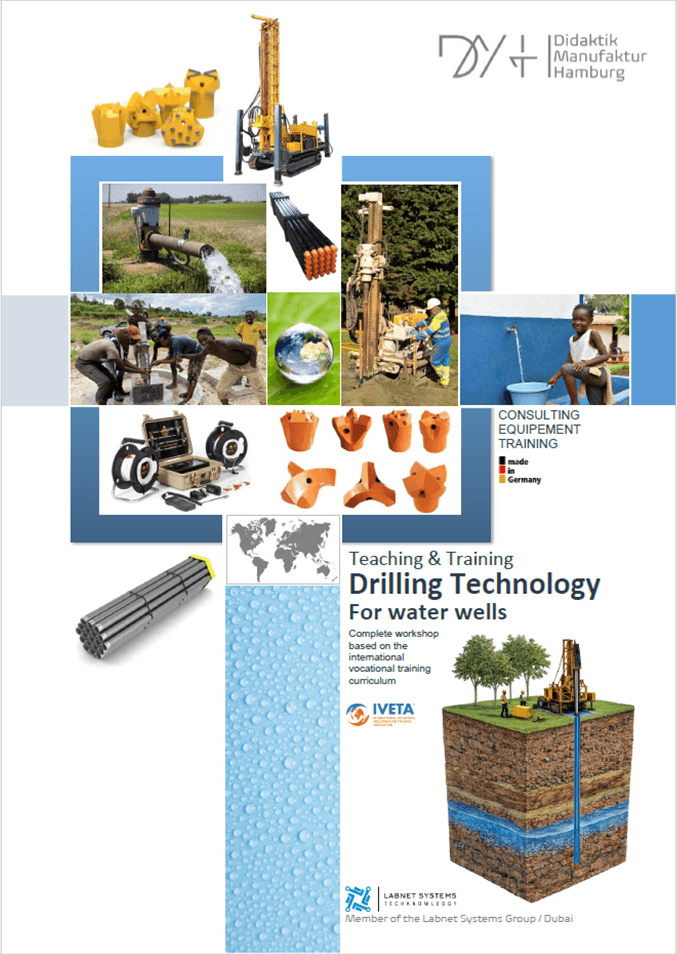
In line with our educational and development philosophy, this workshop integrates drilling technology, hydrogeology, mechanical and process engineering, quality assurance, maintenance, as well as project and operations management into a highly practice-oriented overall concept.
The training program is structured along the entire value chain of a drinking water well – from initial site assessment and exploratory drilling to well construction, water abstraction, hygiene, operation, and long-term maintenance.
Participants acquire a coherent, hands-on competency profile that enables them either to work as qualified professionals in water supply projects or – with appropriate motivation – to establish their own well drilling, service, or maintenance operations.
Practical Learning Along the Entire Well Construction Process
With the fully equipped drilling technology unit, participants gain practical experience in all technical and operational steps of drinking water well construction, including:
Site assessment and basic hydrogeological evaluation
Execution of exploratory drilling in unknown subsurface conditions
Drilling in unconsolidated formations (mud rotary drilling) and hard rock (DTH hammer drilling)
Operation and maintenance of drilling rigs, compressors, flushing systems, and tools
Borehole development, cleaning, and stabilization
Well completion with screen pipes, gravel pack, and sealing
Installation of drinking water pumps and hygienic wellheads
Initial water abstraction, flushing, disinfection, and water sampling
In addition, topics such as operational safety, maintenance planning, spare parts management, occupational safety, and environmental and hygiene standards are covered. Participants learn not only how to drill, but why certain technical decisions are critical for long-term water quality and well sustainability.
This workshop therefore conveys not only technical skills, but also a deep understanding of the responsibility associated with drinking water well construction: A poorly constructed well can be just as harmful as having no well at all. Quality, care, and sustainability are therefore at the core of the program.
Equipment & Learning Environment
The training system is based on a fully equipped drilling and well construction unit, consisting of:
Mobile drilling rig with accessories
Drill pipes and drilling tools for different geological formations
Flushing and compressor systems
Consumables and spare parts for multiple exploratory drillings
Complete well completion materials for one drinking water well
Pumping and water conveyance technology for potable water
The equipment is designed for groups of approximately 16–22 participants, with parallel team-based work (e.g. drilling team, flushing team, technical/maintenance team, documentation team).
Competency Framework (Structure), Organized into 6 Modules
1. Hydrogeology & Site Assessment (HG)
Fundamentals of aquifers, soil and rock types, exploratory drilling
2. Drilling Technology & Methods (DT)
Mud rotary drilling, DTH hammer drilling, tool selection, drilling parameters
3. Machinery, Maintenance & Safety (MM)
Drilling rig, compressor, maintenance cycles, occupational safety
4. Well Completion & Drinking Water Hygiene (WH)
Screen pipes, gravel pack, sealing, disinfection
5. Operation, Maintenance & Sustainability (OM)
Long-term operation, repair, spare parts management
6. Project Management & Local Value Creation (PM)
Planning, cost control, community involvement, service models
Added Value Beyond Training – Practice-oriented teaching approach
Beyond pure training activities, the drilling technology unit enables the implementation of real well construction projects, thereby allowing:
Generation of income through well drilling or maintenance services
Supply of water to communities, schools, or health centers
Integration of practical project work into the training program
This allows the program to become partially self-financing in the long term, while simultaneously delivering direct social impact.
Stationary or Mobile Deployment
The systems are designed for both stationary training facilities and mobile workshop solutions (trailer-mounted). This enables training activities to be conducted directly in rural regions – where access to safe drinking water is most urgently needed.
Extension Modules:
Conclusion
This workshop combines drilling technology, drinking water quality, education, and development impact into an integrated overall concept. It empowers local stakeholders to independently plan, construct, and operate sustainable drinking water wells.
Peripheric equipment
PERIPHERAL EQUIPMENT FOR SECONDARY EDUCATION