
Science for Technical & Vocational Schools
Science for Technical & Vocational Schools
Back to previous page

Science education is highly recommanded in technical and vocational schools because it provides the foundational principles behind the tools, materials, and processes students use in practice.
It helps learners understand why systems work, not just how to operate them, improving problem-solving, safety, and adaptability on the job.
A solid science base also enables graduates to keep pace with technological change, apply innovations effectively, and progress into higher technical roles or further education.
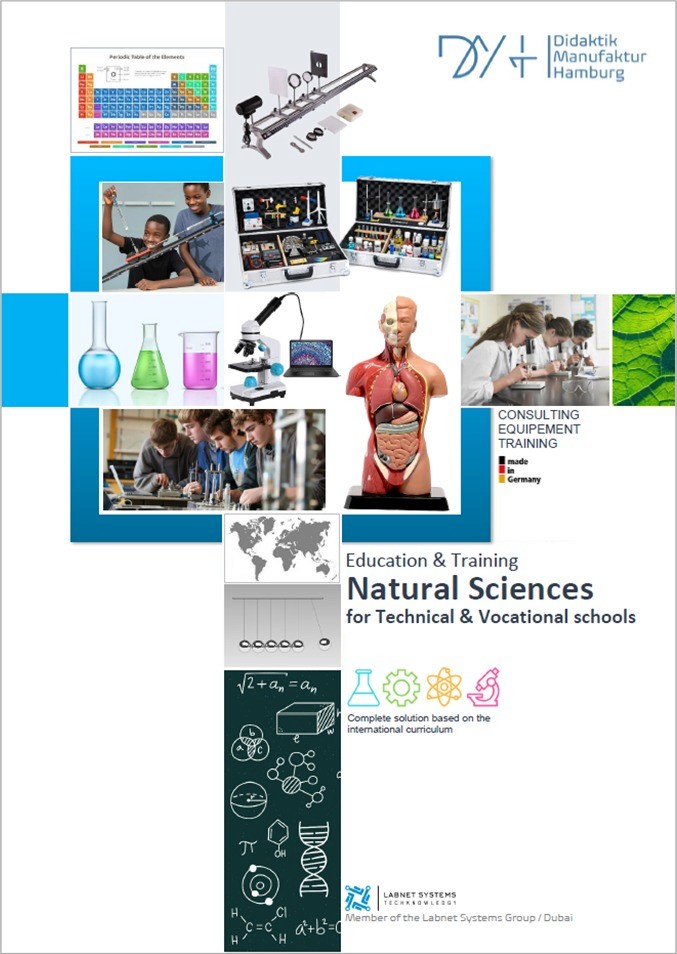
For the natural sciences, we offer a compact solution covering all the fundamentals of physics, chemistry, and biology in the form of topic-based kits, with each box containing a wide range of experiments specifically designed for classroom use and contain all the needed hardware and accessories to start experimentation.
Science education is highly recommanded in technical and vocational schools because it provides the foundational principles behind the tools, materials, and processes students use in practice. It helps learners understand why systems work, not just how to operate them, improving problem-solving, safety, and adaptability on the job. A solid science base also enables graduates to keep pace with technological change, apply innovations effectively, and progress into higher technical roles or further education.
For the natural sciences, we offer a compact solution covering all the fundamentals of physics, chemistry, and biology in the form of topic-based kits, with each box containing a wide range of experiments specifically designed for classroom use and contain all the needed hardware and accessories to start experimentation.
Content of the Kits
Contact us for assistance with your project.
Take advantage of our extensive experience and expertise.
Your Didaktik Manufaktur Hamburg Team !

We will be happy to send you a personalized quote accompanied by
one or more useful extension options and modules.
Back to previous page

Content of the Kits
All experiments include comprehensive instructions and detailed experimental guides.
A complete set covering eight core areas is designed for four to six students.
Mathematics integration: Mathematical aspects have been added to each kit
to strengthen the connection between mathematics and physics.
Curriculum alignment: The experiments are aligned with NGSS, national curricula (including German curricula), and PISA standards to meet the highest educational requirements.
Practicality: Each kit contains a manageable number of experiments that can
be easily integrated into everyday school practice.
PHYSICS : 8 Boxes
Box 1: Fundamentals of Mechanics : Basic measurements, forces, friction, levers
Box 2: Advanced Mechanics : Gas laws, oscillations, waves
Box 3: Fundamentals of Optics : Propagation of light, reflection, lenses, colors
Box 4: Advanced Optics : Wave optics, interference
Box 5: Fundamentals of Electricity : Charge, electric circuits, wiring, simple circuits, circuit design, electrostatics
Box 6: Electromagnetism : Magnetic fields, induction, electromagnets, simple electron beam experiments, switches
Box 7: Heat & Thermodynamics : Expansion, thermal radiation, gas laws, heat absorption, temperature, conduction
Box 8: Energy & Simple Phenomena : Energy conversion, observations – energy transformations, energy sources,
conservation of energy, charge measurements
BIOLOGY : 8 Boxes
Box 1: Cell Biology Fundamentals : Cell structure, function, organelles – Investigation of cells (e.g., liver cells, vacuoles), cell division, cell communication
Box 2: Microscopy and Observation : Microscopic investigations – Observation of nematodes, blood cells, chromoplasts.
Box 3: Human Biology: Sensory Organs : Sensory perception – Experiments on eye, ear, skin (e.g., sensory illusions, acoustics); measurement of reactions
Box 4: Human Biology: Physiology : Electrophysiology (ECG, pulse, blood pressure, skin resistance); nervous system
Box 5: Plant Biology: Growth : Plant growth, germination – Investigation of germination, growth factors; botany models
Box 6: Plant Biology: Physiology/Botany : Photosynthesis, water balance – Experiments on photosynthesis, mineral balance; CO₂/O₂ measurements
Box 7: Ecology and Environment : Ecosystems, cycles – Investigation of air, water, soil (pH, moisture); ecology sets
Box 8: Genetics and Microbiology : DNA, microorganisms – DNA extraction, gel electrophoresis; observation of bacteria.
CHEMISTRY : 6 Boxes
Box 1: General Chemistry & Properties of Matter : Perception, substances in everyday life, separation techniques – sensory perception (seeing, tasting), laboratory equipment and substances in daily life, filtration/distillation, properties of air and gases
Box 2: Inorganic Chemistry & Chemical Reactions : Metals/non-metals, gases, oxidation – atomic mass of metals, rusting as combustion, ammonia detection, mineral nutrients in plants
Box 3: Acids, Bases & Salts : Acid–base reactions, indicators, pH – neutralization, natural and synthetic indicators, acid strength, titration of simple acids and bases
Box 4: Fundamentals of Organic Chemistry : Alcohols, acids, reactions – alkanes (homologous series), carboxylic acids/esters, carbon determination, polymerization (e.g., polystyrene)
Box 5: Physical & Electrochemistry : Energy, equilibria, galvanic cells – energy in reactions, reaction rates, galvanic elements, voltage measurement
Box 6: Biochemistry, Technical & Environmental Chemistry : Biochemical processes/food chemistry, products, sustainability – vitamin C and protein detection, nitrite in food, industrial products, recycling
All experiment boxes are complete and ready for immediate use.
In addition, we offer a wide range of expansion options for your lessons and classrooms, including a large selection of useful sensors, a variety of microscopes, as well as furniture solutions, IT equipment, and much more.
Peripheral equipment
Contact us for assistance with your project.
Take advantage of our extensive experience and expertise.
We will be happy to send you a personalized quote accompanied by
one or more useful extension options and modules.
Your Didaktik Manufaktur Hamburg Team !
Back to previous page
All experiments include comprehensive instructions and detailed experimental guides.
A complete set covering eight core areas is designed for four to six students.
Mathematics integration: Mathematical aspects have been added to each kit to strengthen the connection between mathematics and physics.
Curriculum alignment: The experiments are aligned with NGSS, national curricula (including German curricula), and PISA standards to meet the highest educational requirements.
Practicality: Each kit contains a manageable number of experiments that can be easily integrated into everyday school practice.
All kits are supplied with complete materials, instructions, and digital resources to make learning engaging and effective.
PHYSICS : 8 Boxes
Box 1: Fundamentals of Mechanics : Basic measurements, forces, friction, levers
Box 2: Advanced Mechanics : Gas laws, oscillations, waves
Box 3: Fundamentals of Optics : Propagation of light, reflection, lenses, colors
Box 4: Advanced Optics : Wave optics, interference
Box 5: Fundamentals of Electricity : Charge, electric circuits, wiring – +/- charges, simple circuits, circuit design, electrostatics
Box 6: Electromagnetism : Magnetic fields, induction, electromagnets, simple electron beam experiments, switches
Box 7: Heat & Thermodynamics : Expansion, thermal radiation, gas laws – expansion, heat absorption, temperature, conduction
Box 8: Energy & Simple Phenomena : Energy conversion, observations – energy transformations, energy sources, conservation of energy, charge measurements
BIOLOGY : 8 Boxes
Box 1: Cell Biology Fundamentals : Cell structure, function, organelles – Investigation of cells (e.g., liver cells, vacuoles), cell division, cell communication
Box 2: Microscopy and Observation : Microscopic investigations – Observation of nematodes, blood cells, chromoplasts; simple preparations
Box 3: Human Biology: Sensory Organs : Sensory perception – Experiments on eye, ear, skin (e.g., sensory illusions, acoustics); measurement of reactions
Box 4: Human Biology: Physiology : Body functions – Electrophysiology (ECG, pulse, blood pressure, skin resistance); nervous system
Box 5: Plant Biology: Growth : Plant growth, germination – Investigation of germination, growth factors; botany models
Box 6: Plant Biology: Physiology/Botany : Photosynthesis, water balance – Experiments on photosynthesis, mineral balance; CO₂/O₂ measurements
Box 7: Ecology and Environment : Ecosystems, cycles – Investigation of air, water, soil (pH, moisture); ecology sets
Box 8: Genetics and Microbiology : DNA, microorganisms – DNA extraction, gel electrophoresis; observation of bacteria, ciliates
CHEMISTRY : 6 Boxes
Box 1: General Chemistry & Properties of Matter : Topics: Perception, substances in everyday life, separation techniques – sensory perception (seeing, tasting), laboratory equipment and substances in daily life, filtration/distillation, properties of air and gases
Box 2: Inorganic Chemistry & Chemical Reactions : Topics: Metals/non-metals, gases, oxidation – atomic mass of metals, rusting as combustion, ammonia detection, mineral nutrients in plants
Box 3: Acids, Bases & Salts : Topics: Acid–base reactions, indicators, pH – neutralization, natural and synthetic indicators, acid strength, titration of simple acids and bases
Box 4: Fundamentals of Organic Chemistry : Topics: Alcohols, acids, reactions – alkanes (homologous series), carboxylic acids/esters, carbon determination, polymerization (e.g., polystyrene)
Box 5: Physical & Electrochemistry : Topics: Energy, equilibria, galvanic cells – energy in reactions, reaction rates, galvanic elements, voltage measurement
Box 6: Biochemistry, Technical & Environmental Chemistry : Topics: Biochemical processes/food chemistry, products, sustainability – vitamin C and protein detection, nitrite in food, industrial products, recycling
All experiment boxes are complete and ready for immediate use.
In addition, we offer a wide range of expansion options for your lessons and classrooms, including a large selection of useful sensors, a variety of microscopes, as well as furniture solutions, IT equipment, and much more.
All experiments include comprehensive instructions and detailed experimental guides.
A complete set covering eight core areas is designed for four to six students.
Mathematics integration: Mathematical aspects have been added to each kit to strengthen the connection between mathematics and physics.
Curriculum alignment: The experiments are aligned with NGSS, national curricula (including German curricula), and PISA standards to meet the highest educational requirements.
Practicality: Each kit contains a manageable number of experiments that can be easily integrated into everyday school practice.
All kits are supplied with complete materials, instructions, and digital resources to make learning engaging and effective.
PHYSICS : 8 Boxes
Box 1: Fundamentals of Mechanics : Basic measurements, forces, friction, levers
Box 2: Advanced Mechanics : Gas laws, oscillations, waves
Box 3: Fundamentals of Optics : Propagation of light, reflection, lenses, colors
Box 4: Advanced Optics : Wave optics, interference
Box 5: Fundamentals of Electricity : Charge, electric circuits, wiring – +/- charges, simple circuits, circuit design, electrostatics
Box 6: Electromagnetism : Magnetic fields, induction, electromagnets, simple electron beam experiments, switches
Box 7: Heat & Thermodynamics : Expansion, thermal radiation, gas laws – expansion, heat absorption, temperature, conduction
Box 8: Energy & Simple Phenomena : Energy conversion, observations – energy transformations, energy sources, conservation of energy, charge measurements
BIOLOGY : 8 Boxes
Box 1: Cell Biology Fundamentals : Cell structure, function, organelles – Investigation of cells (e.g., liver cells, vacuoles), cell division, cell communication
Box 2: Microscopy and Observation : Microscopic investigations – Observation of nematodes, blood cells, chromoplasts; simple preparations
Box 3: Human Biology: Sensory Organs : Sensory perception – Experiments on eye, ear, skin (e.g., sensory illusions, acoustics); measurement of reactions
Box 4: Human Biology: Physiology : Body functions – Electrophysiology (ECG, pulse, blood pressure, skin resistance); nervous system
Box 5: Plant Biology: Growth : Plant growth, germination – Investigation of germination, growth factors; botany models
Box 6: Plant Biology: Physiology/Botany : Photosynthesis, water balance – Experiments on photosynthesis, mineral balance; CO₂/O₂ measurements
Box 7: Ecology and Environment : Ecosystems, cycles – Investigation of air, water, soil (pH, moisture); ecology sets
Box 8: Genetics and Microbiology : DNA, microorganisms – DNA extraction, gel electrophoresis; observation of bacteria, ciliates
CHEMISTRY : 6 Boxes
Box 1: General Chemistry & Properties of Matter : Topics: Perception, substances in everyday life, separation techniques – sensory perception (seeing, tasting), laboratory equipment and substances in daily life, filtration/distillation, properties of air and gases
Box 2: Inorganic Chemistry & Chemical Reactions : Topics: Metals/non-metals, gases, oxidation – atomic mass of metals, rusting as combustion, ammonia detection, mineral nutrients in plants
Box 3: Acids, Bases & Salts : Topics: Acid–base reactions, indicators, pH – neutralization, natural and synthetic indicators, acid strength, titration of simple acids and bases
Box 4: Fundamentals of Organic Chemistry : Topics: Alcohols, acids, reactions – alkanes (homologous series), carboxylic acids/esters, carbon determination, polymerization (e.g., polystyrene)
Box 5: Physical & Electrochemistry : Topics: Energy, equilibria, galvanic cells – energy in reactions, reaction rates, galvanic elements, voltage measurement
Box 6: Biochemistry, Technical & Environmental Chemistry : Topics: Biochemical processes/food chemistry, products, sustainability – vitamin C and protein detection, nitrite in food, industrial products, recycling
All experiment boxes are complete and ready for immediate use.
In addition, we offer a wide range of expansion options for your lessons and classrooms, including a large selection of useful sensors, a variety of microscopes, as well as furniture solutions, IT equipment, and much more.
Your advantages at a glance
Peripheral equipment
Contact us for assistance with your project.
Take advantage of our extensive experience and expertise.
We will be happy to send you a personalized quote accompanied by
one or more useful extension options and modules.
Your Didaktik Manufaktur Hamburg Team !
Peripheral equipment