

Biogas / Electricity Production
Biogas / Electricity Production - Substainable Energy Generation
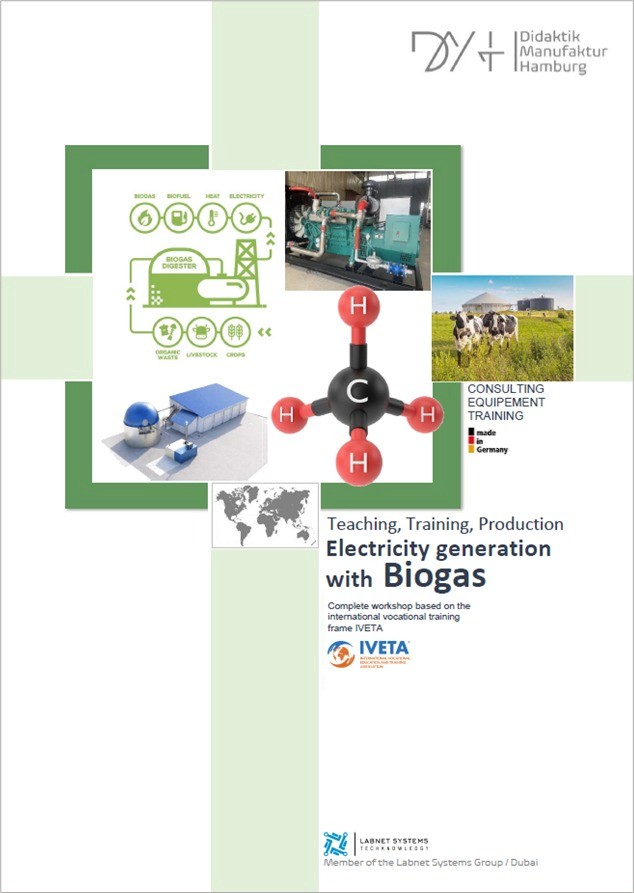
Stationary Training and Demonstration System for Decentralized Energy Supply
Back to previous page

Fully Equipped Biogas Plant for Training, Practical Application, and Regional Value Creation
Concept & Philosophy
In line with our education and development philosophy, this workshop integrates biogas technology, fermentation biology, mechanical and process engineering, quality assurance, operational optimization, and project and plant management into a highly practice-oriented integrated concept.
The training is structured along the complete value chain of a biogas plant—from initial substrate selection and fermentation process control to digester optimization, gas upgrading, electricity production, maintenance, and sustainable plant operation.
Participants acquire a coherent, practice-oriented competency profile that enables them to work as qualified professionals in biogas projects or—given sufficient motivation—to operate, optimize, or establish their own biogas plants as well as advisory and maintenance structures.
Hands-On Learning Along the Entire Biogas Process
With the fully equipped biogas plant, participants gain practical experience in all technical and operational steps of biogas production:
Substrate selection and analysis – Suitability of various biomasses for optimal methane yields
Understanding the fermentation process – The four phases (hydrolysis, acidogenesis, acetogenesis, methanogenesis)
Digester management – Temperature control, pH regulation, mixing
Trace elements and enzymes – Optimization of biological degradation and diagnostics of process disturbances
Gas production and storage – Biogas quality, storage management, gas upgrading
CHP operation and energy utilization – Electricity production, heat recovery, combined heat and power
Digestate management – Utilization as high-quality fertilizer, circular economy
Operational safety and maintenance – Explosion protection, occupational safety, regular inspections
Quality control and laboratory analytics – Digester analysis and process monitoring
Initial commissioning and stabilization – Inoculation, ramp-up, process stability
Where applicable, regulatory requirements (e.g., TRGS 529, TRAS 120), safety management, environmental and hygiene standards are also addressed. Participants learn not only how a biogas plant operates, but also why specific technical and biological decisions are critical for long-term efficiency and economic viability.
Didactic Content
Importance of Biogas for Sustainable Development
Biogas is one of the few renewable energy sources that can be generated decentralised and year-round, independent of weather and seasonality.
It enables:
Decentralized energy supply – Electricity and gas for on-site use (e.g., cooking)
Resource efficiency – Utilization of biomass residues and waste
Circular economy – Closing nutrient cycles through digestate utilization
Economic stability – Additional income for operators and regional value creation
Climate protection – Avoidance of methane emissions from landfills and CO₂-neutral energy generation
The workshop therefore conveys not only technical skills but also a deep understanding of the responsibility associated with operating a biogas plant.
Poorly operated systems lead to process failures, reduced yields, and economic losses.
Quality, diligence, and continuous optimization are central principles of the training.
Equipment & Learning Environment
The training system is based on a fully equipped biogas plant comprising:
Digester (wet fermentation) with agitator and heating
Temperature and pH control systems for optimal fermentation conditions
Gas storage and gas upgrading technology
CHP unit (combined heat and power) for electricity and heat generation
Laboratory equipment for substrate and digester analyses
Measuring devices for gas quality, temperature, pressure, and composition
Consumables and substrates for multiple operating cycles
Documentation and monitoring systems
The equipment is designed for groups of approximately 18–24 participants, with parallel teamwork (e.g., digester management team, gas process team, laboratory analytics, CHP operation, documentation).
Competency Framework and Modulestructure
The training is structured into six progressive modules:
Module 1 – Fermentation Biology & Substrate Management (GB)
Fundamentals of anaerobic digestion, microorganisms, substrate selection and preparation
Module 2 – Digester Technology & Processes (FT)
Digester design, fermentation phases, temperature management, mixing, optimization strategies
Module 3 – Machinery, Operations & Safety (MB)
CHP units, gas engines, safety systems, occupational safety, explosion protection according to TRGS 529
Module 4 – Gas Upgrading & Energy Utilization (GE)
Biogas quality, desulfurization, gas upgrading, combined heat and power, electricity generation
Module 5 – Operation, Maintenance & Process Optimization (BW)
Long-term plant operation, maintenance, trace element supply, process diagnostics, troubleshooting
Module 6 – Project Management & Business Models (PG)
Planning, cost management, financing options, operator models, digestate utilization
Module 7 – Final Project
Added Value Beyond Training
Practical Didactics & Economic Sustainability
Beyond training activities, the biogas plant enables real energy projects and thus:
Generates income through biogas production or energy services
Supplies communities, agricultural enterprises, or businesses with renewable energy
Integrates practical project work into the training program
Markets digestate as a high-quality fertilizer, creating additional value chains
This allows the program to partially self-finance in the long term while delivering direct social and economic benefits.
Conclusion
This workshop integrates biogas technology, energy generation, education, and development impact into a comprehensive, integrated concept. It enables local stakeholders to plan, operate, and optimize sustainable biogas plants independently.
In addition to its educational function, the training facility offers an excellent opportunity for self-financing.
In addition we offer a couple of extensional Module options for your department:
Fully Equipped Biogas Plant for Training, Practical Application, and Regional Value Creation
Concept & Philosophy
In line with our education and development philosophy, this workshop integrates biogas technology, fermentation biology, mechanical and process engineering, quality assurance, operational optimization, and project and plant management into a highly practice-oriented integrated concept.
The training is structured along the complete value chain of a biogas plant—from initial substrate selection and fermentation process control to digester optimization, gas upgrading, electricity production, maintenance, and sustainable plant operation.
Participants acquire a coherent, practice-oriented competency profile that enables them to work as qualified professionals in biogas projects or—given sufficient motivation—to operate, optimize, or establish their own biogas plants as well as advisory and maintenance structures.
Hands-On Learning Along the Entire Biogas Process
With the fully equipped biogas plant, participants gain practical experience in all technical and operational steps of biogas production:
Substrate selection and analysis – Suitability of various biomasses for optimal methane yields
Understanding the fermentation process – The four phases (hydrolysis, acidogenesis, acetogenesis, methanogenesis)
Digester management – Temperature control, pH regulation, mixing
Trace elements and enzymes – Optimization of biological degradation and diagnostics of process disturbances
Gas production and storage – Biogas quality, storage management, gas upgrading
CHP operation and energy utilization – Electricity production, heat recovery, combined heat and power
Digestate management – Utilization as high-quality fertilizer, circular economy
Operational safety and maintenance – Explosion protection, occupational safety, regular inspections
Quality control and laboratory analytics – Digester analysis and process monitoring
Initial commissioning and stabilization – Inoculation, ramp-up, process stability
Where applicable, regulatory requirements (e.g., TRGS 529, TRAS 120), safety management, environmental and hygiene standards are also addressed. Participants learn not only how a biogas plant operates, but also why specific technical and biological decisions are critical for long-term efficiency and economic viability.
Didactic Content
Importance of Biogas for Sustainable Development
Biogas is one of the few renewable energy sources that can be generated decentralised and year-round, independent of weather and seasonality.
It enables:
Decentralized energy supply – Electricity and gas for on-site use (e.g., cooking)
Resource efficiency – Utilization of biomass residues and waste
Circular economy – Closing nutrient cycles through digestate utilization
Economic stability – Additional income for operators and regional value creation
Climate protection – Avoidance of methane emissions from landfills and CO₂-neutral energy generation
The workshop therefore conveys not only technical skills but also a deep understanding of the responsibility associated with operating a biogas plant.
Poorly operated systems lead to process failures, reduced yields, and economic losses.
Quality, diligence, and continuous optimization are central principles of the training.
Equipment & Learning Environment
The training system is based on a fully equipped biogas plant comprising:
Digester (wet fermentation) with agitator and heating
Temperature and pH control systems for optimal fermentation conditions
Gas storage and gas upgrading technology
CHP unit (combined heat and power) for electricity and heat generation
Laboratory equipment for substrate and digester analyses
Measuring devices for gas quality, temperature, pressure, and composition
Consumables and substrates for multiple operating cycles
Documentation and monitoring systems
The equipment is designed for groups of approximately 18–24 participants, with parallel teamwork (e.g., digester management team, gas process team, laboratory analytics, CHP operation, documentation).
Competency Framework and Modulestructure
The training is structured into six progressive modules:
Module 1 – Fermentation Biology & Substrate Management (GB)
Fundamentals of anaerobic digestion, microorganisms, substrate selection and preparation
Module 2 – Digester Technology & Processes (FT)
Digester design, fermentation phases, temperature management, mixing, optimization strategies
Module 3 – Machinery, Operations & Safety (MB)
CHP units, gas engines, safety systems, occupational safety, explosion protection according to TRGS 529
Module 4 – Gas Upgrading & Energy Utilization (GE)
Biogas quality, desulfurization, gas upgrading, combined heat and power, electricity generation
Module 5 – Operation, Maintenance & Process Optimization (BW)
Long-term plant operation, maintenance, trace element supply, process diagnostics, troubleshooting
Module 6 – Project Management & Business Models (PG)
Planning, cost management, financing options, operator models, digestate utilization
Module 7 – Final Project
Added Value Beyond Training
Practical Didactics & Economic Sustainability
Beyond training activities, the biogas plant enables real energy projects and thus:
Generates income through biogas production or energy services
Supplies communities, agricultural enterprises, or businesses with renewable energy
Integrates practical project work into the training program
Markets digestate as a high-quality fertilizer, creating additional value chains
This allows the program to partially self-finance in the long term while delivering direct social and economic benefits.
Conclusion
This workshop integrates biogas technology, energy generation, education, and development impact into a comprehensive, integrated concept. It enables local stakeholders to plan, operate, and optimize sustainable biogas plants independently.
In addition to its educational function, the training facility offers an excellent opportunity for self-financing.
In addition we offer a couple of extensional Module options for your department:
Contact us for assistance with your project.
Take advantage of our extensive experience and expertise.
We will be happy to send you a personalized quote accompanied by
one or more useful extension options and modules.
Your Didaktik Manufaktur Hamburg Team !
Back to previous page

Contact us for assistance with your project.
Take advantage of our extensive experience and expertise.
We will be happy to send you a personalized quote accompanied by
one or more useful extension options and modules.
Your Didaktik Manufaktur Hamburg Team !
Back to previous page
Contact us for assistance with your project.
Take advantage of our extensive experience and expertise.
We will be happy to send you a personalized quote accompanied by
one or more useful extension options and modules.
Your Didaktik Manufaktur Hamburg Team !